Articles by Elisabetta Franzoso
All articles are written in line with my unique approach to coaching using the 4 Dimensions methodology. The 4 Dimensions take the following basic human aspects into account:
Physical, Emotional, Intellectual and Relational to help you discover for yourself what is holding you back and to reshape your life from the inside out. I have also added two additional dimensions, spiritual and confidence as these are integral to my work and coaching process.
Enjoy!

The Physical Dimension
The Physical Dimension explores the part of us that communicates with the external world, our body which is the temple and container of our mind. Within this dimension I address physical confidence and explore the importance of movement and nutrition and sleep patterns.

We may laugh and be excited for a time, but due to the nature of human life, this feeling or mood cannot always dwell within us. Read more about happiness and the ‘art’ within this blog!

Given all the negative messages that most of us received about sex when we were young, it’s no surprise we rarely talk about sex in an overt setting. Unfortunately, a lack of informative sex education means most of us don’t even have access to relatively basic information. In our society, sex is still not fully accepted as a topic of conversation, at least not in its entirety. Being silent about sex keeps us ignorant though, so it’s vitally important that we begin to normalise talking about sex in our society, and this should start as early as school.
A few years ago, my daughter gave me two books for Christmas, both covering the same topic: solitude. At that time, I still didn’t feel or see the value of solitude, in fact, I couldn’t stand it at all, even though I was thrust into it unwillingly over many years.
I perceived solitude to be a sort of curse but my daughter, who was observing from the outside in, saw it as a blessing that had arrived after my divorce.

With time and lots of practice and experience, I have learnt that life is not about what happens to us. It is about how we react to what happens and, above all, what we do with that. Do we resist or surrender? Do we ignore and deny, or do we embrace and feel grateful?
Yes, this year I contracted Covid-19, and I went through the experience completely on my own. My daughter lives in London, and my mum (aged 81), in Italy. I am currently in Barcelona - one of the worst-affected cities in Europe when it comes to this pandemic – and, at present, a city that is in a state of alarm.

“When I first chose to get help from a counsellor, I was 37. After seeing myself repeat learnt negative patterns and behaviours as a mother and wife, I chose to go beyond the shame and taboo of sharing my inner world and my history with a stranger. My intuition told me that this decision would set me on a new path of awareness and help me find freedom. Soon after, I did.”

Our desire to deny our real age as we grow older is not a new phenomenon, but why is it such an ingrained reaction?
Recent blog posts exploring the Physical Dimension
The Emotional Dimension

The Emotional Dimension looks in particular at the right part of the brain, where your emotions stem out. Emotions are crucial to us being human. I look at the importance of the Emotional Intelligence (EQ) in building confidence in ourselves and relationships with others.
We may laugh and be excited for a time, but due to the nature of human life, this feeling or mood cannot always dwell within us. Read more about happiness and the ‘art’ within this blog!

Relationships in the old world have always had an external focus - we try to make ourselves whole and happy by getting something from outside ourselves. Inevitably, objective or expectation results in disappointment, resentment, and frustration. We cling to relationships out of emotional insecurity or go from one to another searching for that missing piece that we have not yet found.

Just before Covid -19 pandemia impacted our life, I remember Jesus Sanfiz Nou, a well-known psychologist based in Barcelona, saying:
“Elisabetta, why don’t you build a workshop or a training programme and teach how to recognise and manage ‘narcissism’? Today it is such an important topic. You have been surrounded and challenged by several narcissists in your life: in family of origin, marriage, and in the world of work and friendships too.

Let's start with what characterizes a narcissist. The recurring characteristics in a pathological narcissist are varied: feelings of emptiness, boredom, and emotional anesthesia. Narcissists are often portrayed as charming, confident and proud, convincing and excellent communicators. Just look at some of the leaders who rule our world today! Let's not forget that one of the most common characteristics of narcissism and its communication is… manipulation.
A few years ago, my daughter gave me two books for Christmas, both covering the same topic: solitude. At that time, I still didn’t feel or see the value of solitude, in fact, I couldn’t stand it at all, even though I was thrust into it unwillingly over many years.
I perceived solitude to be a sort of curse but my daughter, who was observing from the outside in, saw it as a blessing that had arrived after my divorce.
With time and lots of practice and experience, I have learnt that life is not about what happens to us. It is about how we react to what happens and, above all, what we do with that. Do we resist or surrender? Do we ignore and deny, or do we embrace and feel grateful?
Yes, this year I contracted Covid-19, and I went through the experience completely on my own. My daughter lives in London, and my mum (aged 81), in Italy. I am currently in Barcelona - one of the worst-affected cities in Europe when it comes to this pandemic – and, at present, a city that is in a state of alarm.

To become authentic love, the early stages of romance require a fundamental condition beyond that strong sexual attraction: choice. To transform ‘erotic love’ or lust into a mature, authentic love, we’re required to choose to love from the centre of our being (be it the essence, spiritual self or soul, whatever resonates most with you). We must decide to see, sense, feel and connect with the other person through their own essence in a conscious and mindful movement. In that space, as Eric Fromm explains, we are all the same. And from this principle therefore, it doesn’t matter who we love because love should be a conscious commitment, an honest choice and a mindful action. I’d also add that authentic love begins as a desire and perseveres because of choice.

Learning to cope with fear during COVID-19 and beyond. Fear, shall we dance with it? Great question! What do you think? I personally believe that if we truly want to, we can. Like many of you, I'm sure, I struggled to adapt to this new way of living in 'lockdown' and I wanted to share some thoughts on how to cope with it. As ever your emotional well-being is crucial to your overall well-being and it is important that you do everything you can to protect it and nurture it.
“When I first chose to get help from a counsellor, I was 37. After seeing myself repeat learnt negative patterns and behaviours as a mother and wife, I chose to go beyond the shame and taboo of sharing my inner world and my history with a stranger. My intuition told me that this decision would set me on a new path of awareness and help me find freedom. Soon after, I did.”

There are several common traits unifying empathic people, one of which is the commonly associated personality trait, empathy. Empathy is defined as a sign of emotional intelligence and emotional ability to understand other people’s feelings as if they were one’s own. Empathy is the act of putting ourselves in other people’s shoes and reaching our hearts out to others.

Working as a communication skills trainer in Asia and Europe for the last 20 years, brought me into contact with many people who shared a common ‘worst fear’: public speaking. “Why public speaking?” I would enquire. The answer is always a fear of rejection. “Rejected for what?” I’d probe. The answers I’d hear were often a resounding fear of not being good enough, others’ judgement or for not delivering what the audience expects of them.

I believe we are living in a very exciting and powerful time. You may not agree with this of course, we’re different human beings with different backgrounds, experiences and different conditioning. We’re allowed to see things in different ways and no one would be bad or wrong for doing so.
Why do I think it’s an exciting and powerful time? I feel that on the deepest level of consciousness, a radical spiritual transformation is taking place in a universal scale. We’re all in some way being challenged to let go of our present way of living and create a new one in its place.

I’ve struggled with fear for a really long time. It manifests itself in different forms each day. In this blog post I want to address the fear of the unknown. And the subsequent resistance to facing the unknown that we have, paralysed by this fear. We give fear the keys to our fate so that we can feel comfortable and safe. But what if we looked it straight in the face instead? What if we kicked the door down and took control back from fear?

“One of these dimensions in particular, is one that we tend to forget or prefer not to deal with. Looking into it might lead us to recognise something about ourselves that we might have preferred not to see, so we don’t look into it. I’m talking about the emotional dimension, which refers to our feelings, empathy, moods and creativity.”
“I realised that before going out to preach to the world, through my work and social activism, I needed to be the first to take my own advice. I needed to learn how to ‘walk my talk’ by becoming a loving, responsible human being myself, from the inside and out. “

98% of the Earth’s population is not self-actualised, according to Abraham Maslow. They therefore, act out from a space of unconditional or ‘inauthentic love’ for themselves and others. I believe that, no matter how much self-empowerment work I put myself through, becoming a self-actualised or authentic human being is a never ending process.

Nowadays, we use words such as wholeness and holistic very often. You hear about holistic coaching, holistic counselling, holistic medicine… but what does holistic actually mean? And what does it mean to become whole?

How many of you can relate to this belief system that we mustn’t be happy unless it’s because we’re making someone else happy?

Happiness is being aware of our own gifts. To do so requires us to build awareness around our strengths and flaws, our light and our shadow. And once we've developed that kind of awareness, happiness is about making use of and sharing what we have discovered and built for ourselves with others so that they may learn and build happiness for themselves.

Loving and being Loved is a basic necessity in life. There are many ways to and be loved but I believe if you strip all these ways bare (be it romantic, friends, family etc), you will find that it comes down to two main kinds of love: 'Adult' love and 'Childish' love.
Blog posts exploring the Emotional Dimension
The Intellectual Dimension

The Intellectual Dimension looks at the left part of our brain ‘the thinking or logical mind’. This is where we we think, analyze, judge and critique. Many of us find that we have been conditioned to think and talk in a negative way, which is why I explore ways we can rewind this.
I believe we are living in a very exciting and powerful time. You may not agree with this of course, we’re different human beings with different backgrounds, experiences and different conditioning. We’re allowed to see things in different ways and no one would be bad or wrong for doing so.
Why do I think it’s an exciting and powerful time? I feel that on the deepest level of consciousness, a radical spiritual transformation is taking place in a universal scale. We’re all in some way being challenged to let go of our present way of living and create a new one in its place.
“I realised that before going out to preach to the world, through my work and social activism, I needed to be the first to take my own advice. I needed to learn how to ‘walk my talk’ by becoming a loving, responsible human being myself, from the inside and out. “

Neurolinguistic Programming (NLP) teaches us that a simple change of words can make the difference in how we speak to ourselves and others. This is because of the nature of the words, for example, ‘lessons’ or ‘experiences’ are far less judgemental than ‘mistakes’. The knowledge that the effect that language and empowering words has on boosting and transforming our reality is not exclusive to NLP practitioners or trainees.

How do you know whether Coaching or Counselling is better suited for you? What are the myths surrounding the two that you need to know about?
Nowadays, we use words such as wholeness and holistic very often. You hear about holistic coaching, holistic counselling, holistic medicine… but what does holistic actually mean? And what does it mean to become whole?

I’ve learnt many lessons over the years, how over-responsibility is just as irresponsible as none at all, is just one. But it’s a very crucial insight for our wellbeing and self-love that I wanted to share and clarify with you.

There is no manual that teaches us how to become who we really are and how close or far from it we find ourselves today. There is no assessment to gauge how worthy we are either. Worthy of what? Of Love and Respect.
Blog posts exploring the Intellectual Dimension
The Relational Dimension
The Relational Dimension looks at how human beings build relationships. There are different kinds of relationships we can build and learn from. It’s important to explore all of our relationships or lack of - whether that was with our parents, partners, teachers, friends or children.
We may laugh and be excited for a time, but due to the nature of human life, this feeling or mood cannot always dwell within us. Read more about happiness and the ‘art’ within this blog!
Relationships in the old world have always had an external focus - we try to make ourselves whole and happy by getting something from outside ourselves. Inevitably, objective or expectation results in disappointment, resentment, and frustration. We cling to relationships out of emotional insecurity or go from one to another searching for that missing piece that we have not yet found.
Just before Covid -19 pandemia impacted our life, I remember Jesus Sanfiz Nou, a well-known psychologist based in Barcelona, saying:
“Elisabetta, why don’t you build a workshop or a training programme and teach how to recognise and manage ‘narcissism’? Today it is such an important topic. You have been surrounded and challenged by several narcissists in your life: in family of origin, marriage, and in the world of work and friendships too.
Let's start with what characterizes a narcissist. The recurring characteristics in a pathological narcissist are varied: feelings of emptiness, boredom, and emotional anesthesia. Narcissists are often portrayed as charming, confident and proud, convincing and excellent communicators. Just look at some of the leaders who rule our world today! Let's not forget that one of the most common characteristics of narcissism and its communication is… manipulation.
Given all the negative messages that most of us received about sex when we were young, it’s no surprise we rarely talk about sex in an overt setting. Unfortunately, a lack of informative sex education means most of us don’t even have access to relatively basic information. In our society, sex is still not fully accepted as a topic of conversation, at least not in its entirety. Being silent about sex keeps us ignorant though, so it’s vitally important that we begin to normalise talking about sex in our society, and this should start as early as school.

When we talk about the Cursed Triangle, our mind easily goes to the Bermuda Triangle in the Pacific Ocean. But there is another dangerous triangle constantly present in our lives - it involves our body, our words, our voice, our thoughts, and our emotions.

A mom-son relationship is deeply delicate. If it is going smooth, the boy can flourish under the care of his mom but when trouble seeps through both need to make the necessary effort to fill the gaps. With my decades of experience as a life coach and counsellor I have seen this pattern time and time again. In Understanding Mom And Son Relationships, I discussed the psychology behind his. Here, I dive deeper into the issues at play.
“Elisabetta, do you know something? All men are screwed up by their moms,” my mentor, a highly experienced clinical psychologist, recently told me. It’s a bold statement but not an uncommon one in the field of psychology.
John Whittington, a UK-based personal development coach, echoes this viewpoint: “The relationship a man has with his mother is the birth of his relationship with his life, his sex life and his leadership authority. Men are born of women and bond first with their mother. This is a powerful experience for mother and son and can overwhelm and entangle both.”

In this article, we will explore the influence that parents have on their children and how these impacts affect their children for the rest of their lives.
As an integrative coach, trauma counsellor and educator for the past 20 years, I have heard many female clients say, "Now I realise how much my father’s unpredictability and emotional distance shaped so much of my childhood, and has continued to shape me as an adult!"
And my male clients, "Now I realise how much my mum’s anxiety and overwhelming love shaped so much of my childhood, and has continued to shape me as an adult!"
I have also stated the same lines myself when processing my own story in therapy. My daughter also recently said to me, “Mum do you realise how we all get screwed up by our parents?”
I smiled first. Then I looked inward and began to think about how meaningful what she had said was.
I could not agree more with her.

In this article, we will overview and elaborate on the meaning of projections in relationships whether that’s parent and child, couples, colleagues or friendships. When we project, we are defending ourselves against unconscious impulses or traits, either positive or negative, that we’ve denied in ourselves, that we are blind about. Instead, we push them out, often under the shape of judgement or blame.
Learning to cope with fear during COVID-19 and beyond. Fear, shall we dance with it? Great question! What do you think? I personally believe that if we truly want to, we can. Like many of you, I'm sure, I struggled to adapt to this new way of living in 'lockdown' and I wanted to share some thoughts on how to cope with it. As ever your emotional well-being is crucial to your overall well-being and it is important that you do everything you can to protect it and nurture it.

Traditionally and typically, women exhibit and express qualities such as sensitivity, receptivity, emotions and intuition. For this reason, these qualities have become the representation or characteristic of 'female energy’.
Men have traditionally nurtured the ability to be assertive, strong, dominant, direct and unapologetic, which have become symbolic of 'male energy'. Over time, due to societal expectations and implications, men began to deny their intuitive side and emotional freedom, just as women repressed their ability to be firm, assertive and powerful….

To become authentic love, the early stages of romance require a fundamental condition beyond that strong sexual attraction: choice. To transform ‘erotic love’ or lust into a mature, authentic love, we’re required to choose to love from the centre of our being (be it the essence, spiritual self or soul, whatever resonates most with you). We must decide to see, sense, feel and connect with the other person through their own essence in a conscious and mindful movement. In that space, as Eric Fromm explains, we are all the same. And from this principle therefore, it doesn’t matter who we love because love should be a conscious commitment, an honest choice and a mindful action. I’d also add that authentic love begins as a desire and perseveres because of choice.
There are several common traits unifying empathic people, one of which is the commonly associated personality trait, empathy. Empathy is defined as a sign of emotional intelligence and emotional ability to understand other people’s feelings as if they were one’s own. Empathy is the act of putting ourselves in other people’s shoes and reaching our hearts out to others.
While the concept of narcissism dates back thousands of years, narcissistic personality disorder only became recognised as a mental illness within the last 2 decades. But how did narcissism come to be?
I believe we are living in a very exciting and powerful time. You may not agree with this of course, we’re different human beings with different backgrounds, experiences and different conditioning. We’re allowed to see things in different ways and no one would be bad or wrong for doing so.
Why do I think it’s an exciting and powerful time? I feel that on the deepest level of consciousness, a radical spiritual transformation is taking place in a universal scale. We’re all in some way being challenged to let go of our present way of living and create a new one in its place.

There was a time when married couples would stay together for life. Despite a lack of happiness in the relationship, often rooted in unhealthy co-dependency between two partners, marriage wasn’t easily dissolved. People would choose to stay ‘glued’ together in the name of a commitment they made many years before. Often because it was financially more comfortable. Other times because they lacked the courage to take a leap of faith and enter the unknown. And more times than not, because they were used to conforming to the expectations of a hypocritical society.

In this particular article, as I talk about mother-daughter relationships, I write addressing the group of women whose painful childhood relationships and experiences with their mothers have gone on to warp their adulthood in ways they may not recognise.

The importance of a father’s role in our lives is not as widely discussed and invites a lot of different conversations, so I’m going to continue unpacking it bit by bit, starting by focusing on the relationship between Fathers & Daughters.

Does a right man/woman exist?Is there a right or wrong friend/colleague/partner?Is there a right or wrong love?When do I know it’s the right time to take the risk of loving?Will this love make me happy again?
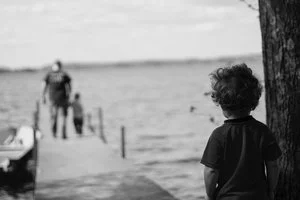
Types of unavailable fathers and how the father figure impacts who we become and the choices we make.

Through my own studies and life experience over the years, I came to realise that we can be compulsive and addicted to any kind of relationship, even one with a friend or colleague. The most detrimental reality is that often we don’t or can’t recognise it and can live a life going through toxic relationship cycles until we die.

Narcissism is rife in the media today and is being Googled more often than ever. People are waking up to various narcissistic characters in their lives and I’m hearing more conversations about “how to remove toxic people from your life”, perhaps because of the rise in self-development and self-care.

This blog aims to shed a light on the fact that it’s not age that decides when we are adults. It’s not financial independence or not needing to ask for any help. What decides when we’re adults, and my mum has said this countless times in her writing, is when we begin taking responsibility for our choices and start standing in ourselves.

What happens when we move passed the ‘honeymoon phase’ of a relationship, often during the first year of living together.

Parents will often come and tell me that they feel as though they’d raised their second child the same as the first, but then ask, “so why are they so different from one another?”.
How do you know whether Coaching or Counselling is better suited for you? What are the myths surrounding the two that you need to know about?
98% of the Earth’s population is not self-actualised, according to Abraham Maslow. They therefore, act out from a space of unconditional or ‘inauthentic love’ for themselves and others. I believe that, no matter how much self-empowerment work I put myself through, becoming a self-actualised or authentic human being is a never ending process.
Nowadays, we use words such as wholeness and holistic very often. You hear about holistic coaching, holistic counselling, holistic medicine… but what does holistic actually mean? And what does it mean to become whole?
Blog posts exploring the Relational Dimension

The Spiritual Dimension
The Spiritual Dimension looks at how human beings incorporate spirituality into their lives. This doesn’t just have to mean religion, Spirituality can manifest within your life in many shapes and forms. It can have a profound impact on the other dimensions.

was very disconnected from anything I could not prove or touch for many years. Mystery was not my thing. This probably came from the model I’d absorbed growing up: that I had to manage everything by myself, I had to make it all happen on my own and most importantly, that I could not trust anyone or anything besides myself.

“Religions have caused a lot of pain and trouble over hundreds and thousands of centuries but at their core, they offered us the possibility for spiritual experience and connection. They served a purpose which has now been totally lost in the whirlwind of skepticism we developed to protect ourselves against the unveiled dogma and corruption.”
I believe we are living in a very exciting and powerful time. You may not agree with this of course, we’re different human beings with different backgrounds, experiences and different conditioning. We’re allowed to see things in different ways and no one would be bad or wrong for doing so.
Why do I think it’s an exciting and powerful time? I feel that on the deepest level of consciousness, a radical spiritual transformation is taking place in a universal scale. We’re all in some way being challenged to let go of our present way of living and create a new one in its place.

Scott Peck opened his bestseller, The Road Less Travelled, stating that “Life is Difficult”. Buddhism tells us that “Life is Suffering”. Christianity teaches us that “Life is Sacrifice”. Have we been misled?

The search for the purpose of life has puzzled us for thousands of years. That’s because we typically begin at the wrong place - with ourselves.

We grow up, into ‘responsible adults’ thinking that we’re becoming more loving and more wise, but blind to what we’ve left behind because of fear and life experience. That wise, loving and responsible centre of ours is what we truly are underneath it all.
Blog posts exploring the Spiritual Dimension
The Confidence Dimension

The Confidence Dimension looks at self-confidence and how confidence shows up in relationships. It’s important to build our confidence levels, to show up for ourselves, in relationships, family and work settings.
To become authentic love, the early stages of romance require a fundamental condition beyond that strong sexual attraction: choice. To transform ‘erotic love’ or lust into a mature, authentic love, we’re required to choose to love from the centre of our being (be it the essence, spiritual self or soul, whatever resonates most with you). We must decide to see, sense, feel and connect with the other person through their own essence in a conscious and mindful movement. In that space, as Eric Fromm explains, we are all the same. And from this principle therefore, it doesn’t matter who we love because love should be a conscious commitment, an honest choice and a mindful action. I’d also add that authentic love begins as a desire and perseveres because of choice.

I have been coaching people around the topic of confidence for many years. Having also designed corporate workshops which I've been delivering to hundreds of people around the world, I feel I've naturally grown into a Confidence Coach.
Blog posts exploring the Relational Dimension
Alternatively, read through my articles here:
The Stages of Love
What happens when we move passed the ‘honeymoon phase’ of a relationship, often during the first year of living together.
Reflecting on 10 Years of Willingness and Courage
“I realised that before going out to preach to the world, through my work and social activism, I needed to be the first to take my own advice. I needed to learn how to ‘walk my talk’ by becoming a loving, responsible human being myself, from the inside and out. “
How Birth Order Impacts Our Children
Parents will often come and tell me that they feel as though they’d raised their second child the same as the first, but then ask, “so why are they so different from one another?”.

Parenting Skills II: Raising Successful Children
Who are successful children and how do we raise them to be so?

Parenting Skills I: Becoming a 'Different' Parent
To become parents, or ‘different’ parents, we don’t actually need to do much, but we are required to be. When the focus shifts to being rather than doing, you automatically become a more authentic role model for your own children.
The Power of Language: Was It A Lesson or a Mistake?
Neurolinguistic Programming (NLP) teaches us that a simple change of words can make the difference in how we speak to ourselves and others. This is because of the nature of the words, for example, ‘lessons’ or ‘experiences’ are far less judgemental than ‘mistakes’. The knowledge that the effect that language and empowering words has on boosting and transforming our reality is not exclusive to NLP practitioners or trainees.

How Boundaries (or lack thereof) Directly Affect Your Health
The Difference Between Counselling & Coaching
How do you know whether Coaching or Counselling is better suited for you? What are the myths surrounding the two that you need to know about?
Authentic Love vs. Inauthentic Love
98% of the Earth’s population is not self-actualised, according to Abraham Maslow. They therefore, act out from a space of unconditional or ‘inauthentic love’ for themselves and others. I believe that, no matter how much self-empowerment work I put myself through, becoming a self-actualised or authentic human being is a never ending process.
Wholeness: The Search for our Lost Self
Nowadays, we use words such as wholeness and holistic very often. You hear about holistic coaching, holistic counselling, holistic medicine… but what does holistic actually mean? And what does it mean to become whole?
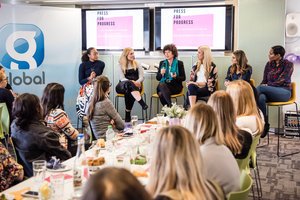
#PressforProgress | IWD2018 @ Global
On March 8th, International Women’s Day, I was invited to Global HQ to join a panel of amazing women to discuss the #Timesup movement, gender pay gap and how we should look to move forward from here as a society.
I Could Be Happy But...
How many of you can relate to this belief system that we mustn’t be happy unless it’s because we’re making someone else happy?
The Difference Between Responsibility & Accountability
I’ve learnt many lessons over the years, how over-responsibility is just as irresponsible as none at all, is just one. But it’s a very crucial insight for our wellbeing and self-love that I wanted to share and clarify with you.
Wellbeing & Happiness: Journey Down the Road Less Travelled
Happiness is being aware of our own gifts. To do so requires us to build awareness around our strengths and flaws, our light and our shadow. And once we've developed that kind of awareness, happiness is about making use of and sharing what we have discovered and built for ourselves with others so that they may learn and build happiness for themselves.
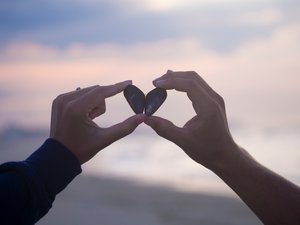
How to Fix Broken Trust in a Relationship
Happiness is being aware of our own gifts. To do so requires us to build awareness around our strengths and flaws, our light and our shadow. And once we've developed that kind of awareness, happiness is about making use of and sharing what we have discovered and built for ourselves with others so that they may learn and build happiness for themselves.
I Am Worthy
There is no manual that teaches us how to become who we really are and how close or far from it we find ourselves today. There is no assessment to gauge how worthy we are either. Worthy of what? Of Love and Respect.

Why Am I Addicted to Toxic Relationships?
In our lives we come across and engage in various types of relationships: romantic, professional, familial, casual and many more. Relationships can be many things... but always fall under the categories of healthy or toxic.

Pieces Lost, Faith Found
Wellbeing and Self-Awareness are my keywords for this year. As the blogs unfold, I want to uncover various aspects of wellbeing and self-awareness, as well as visit the tools we can use to get to know ourselves more and nurture the art of living well.

Self-Awareness: A Lifetime Adventure
A Journey, Not a Quick Fix: Developing Self-Awareness is not a straightforward journey, rather one filled with wrong turns, kinked and forever veering in unknown directions. It's a journey for a life time and of a life time, a magical adventure to be enjoyed with mature eyes and child-like curiosity.

Do I Need a Life Coach?
People on the outside can see the inside of us much more clearly and objectively than we can ourselves. They can see what we, alone, cannot.